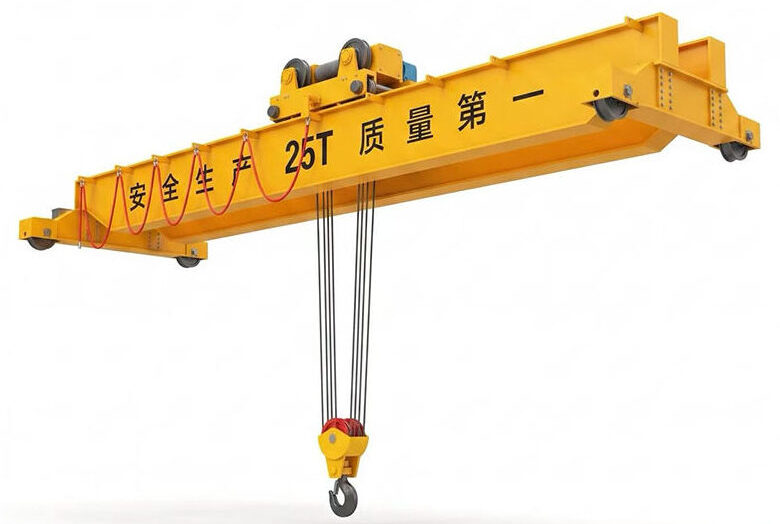
Tropical arid regions are characterized by extreme heat, intense sand and dust, strong solar radiation, and significant diurnal temperature fluctuations; these conditions prevail across the Middle East and the core industrial belts of Africa. Such harsh operating environments place rigorous demands on EOT cranes regarding heat resistance, dust protection, corrosion resistance, and electrical compatibility. Standard models are highly susceptible to issues such as overheating trips, abrasive wear from sand and dust, structural corrosion, and electrical faults, rendering them incapable of meeting the requirements for long-term, continuous production. Consequently, custom design tailored to tropical arid environments is essential for ensuring stable crane operation, reducing maintenance costs, and extending equipment service life.
Table of Contents
1.Core Operating Challenges of EOT Cranes in Tropical Arid Regions
Industrial sites in the arid tropical regions of the Middle East and Africa are frequently exposed to harsh operating conditions, including extreme heat, intense solar radiation, airborne sand and dust, and significant diurnal temperature fluctuations; coastal areas also face the added challenge of salt spray corrosion. Standard EOT cranes designed for ambient temperatures—lacking specialized adaptations—are prone to issues such as motor overheating, sand ingress through seals, brake performance degradation, and frequent electrical failures during prolonged operation, all of which drastically reduce the equipment’s service life. Official industrial data from the UAE’s Ministry of Industry and Advanced Technology (MoIAT) indicates that hot, arid, and dusty environments are the primary cause of equipment failure and downtime for industrial cranes in the region.
2.Thermal Design & Derating for EOT Crane
In tropical, arid industrial environments, indoor temperatures can reach 50–55°C, making standard motors highly susceptible to thermal derating during full-load operation. EOT cranes designed for these conditions must utilize Class H high-temperature-resistant motors and incorporate a 10%–15% power derating to prevent tripping caused by high-temperature overloads. The braking system features an upgraded, specialized heat dissipation structure to mitigate heat accumulation during continuous operation. Electrical control cabinets come standard with sunshades and either cooling fans or cabinet air conditioners to stabilize the operating temperatures of control components and variable frequency drives, ensuring reliable, continuous, round-the-clock equipment operation.
3.Dust & Sand Protection for EOT Crane
Fine, airborne desert sand possesses high penetrative power and is a primary cause of equipment stalling, component wear, and circuit malfunctions. The unit’s electrical components feature an IP65 rating for superior dust and water protection, while bearings, gearboxes, and travel mechanisms utilize multi-lip seal structures to completely block sand ingress. Specialized high-temperature, wear-resistant grease is used to prevent the hardening and failure associated with standard lubricants under high-temperature conditions. Additionally, track sand scrapers and dust shields are installed to eliminate issues such as equipment vibration, tracking misalignment, and uneven wheel wear caused by sand accumulation.
4.Corrosion Protection in Tropical Arid Zones
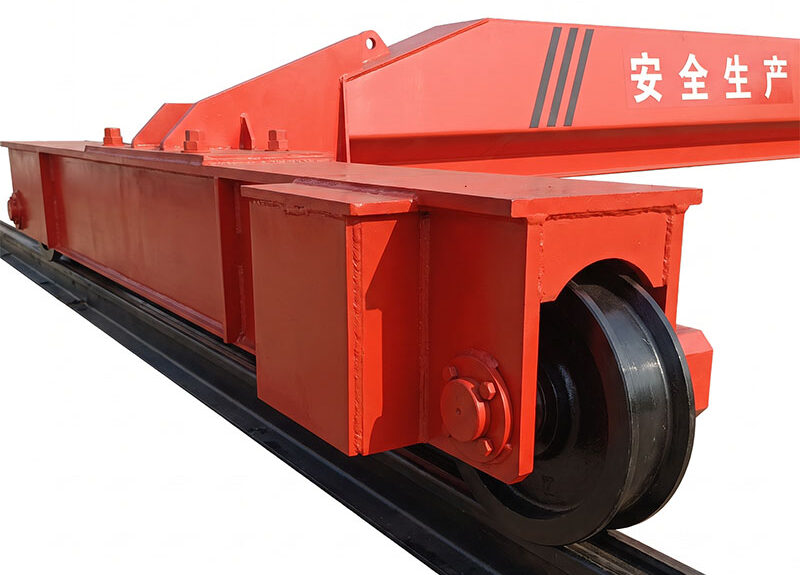
Even in arid environments with low rainfall, corrosion risks persist; at coastal sites, salt spray carried by sea winds can travel significant distances, leading to insidious electrochemical corrosion. The steel structures of the EOT cranes undergo Sa2.5-grade abrasive blasting and feature a three-layer anti-corrosion system—comprising an epoxy primer, an intermediate coat, and a weather-resistant topcoat—tailored to C3 or C5-M corrosion protection standards based on the site’s proximity to the coast. All metal fasteners are hot-dip galvanized, and the entire anti-corrosion process is completed in the factory, thereby overcoming the challenges of difficult touch-ups, high costs, and suboptimal results often encountered at remote construction sites.
5.Electrical System Customization
Remote construction sites in arid tropical regions frequently face issues such as unstable power grids and fluctuating diesel generator output, with voltage deviations reaching up to ±15%. These customized EOT cranes feature a wide-voltage variable-frequency control system and are equipped with surge protection and lightning arresters to handle challenging local power supply conditions. The cranes utilize specialized high-temperature resistant, flame-retardant cabling, with all connections sealed against dust; this design eliminates circuit failures caused by high-temperature aging or dust ingress, thereby comprehensively enhancing the operational stability of the electrical system.
6.Recommended Maintenance Schedule for EOT Crane in Dry Hot Climates
High-temperature environments accelerate grease degradation and the wear of mechanical components, necessitating shorter intervals for lubrication and maintenance. Routine weekly inspections should cover sand accumulation, paintwork condition, seal integrity, and wheel wear; monthly specialized tests should verify safety systems such as brakes, limit switches, and high-temperature protection; and annual inspections should include full-load testing and non-destructive testing (NDT) of the steel structure. Stocks of wear parts—such as brake pads, seals, and limit switches—should be maintained on-site to enable rapid fault resolution and minimize production downtime losses.
7.Conclusion
High temperatures, dust and sand, salt spray, and unstable power grids in tropical arid regions impose extremely rigorous demands on the overall performance of EOT cranes. Standard models struggle to cope with such harsh operating conditions, often suffering from frequent breakdowns and a shortened service life. Focusing on the tropical arid markets of the Middle East and Africa, Yue Lifting tailors EOT cranes specifically for local conditions—incorporating features such as high-temperature derating capabilities, comprehensive dust-proof sealing, specialized anti-corrosion treatments, and electrical systems designed to withstand voltage fluctuations. By addressing operational pain points at the source, the company delivers safe, stable, and efficient lifting solutions for overseas industrial projects.