EOT crane components play a critical role in the safety, stability, and long-term performance of an electric overhead traveling crane. From the hoisting mechanism and travel mechanism to the electrical control system and lifting gear, each component directly affects lifting efficiency, operational reliability, and maintenance costs.
Understanding EOT crane components is especially important for procurement and maintenance personnel. While tonnage and lifting capacity are often the first specifications considered when purchasing a crane, component design, quality, and common failure patterns can have a significant impact on long-term operating costs. This article explains the key EOT crane components, introduces common faults, and provides practical troubleshooting approaches to help factories reduce unplanned downtime and maintain reliable crane operation.
Table of Contents
Four Core EOT Crane Components
Hoisting Mechanism
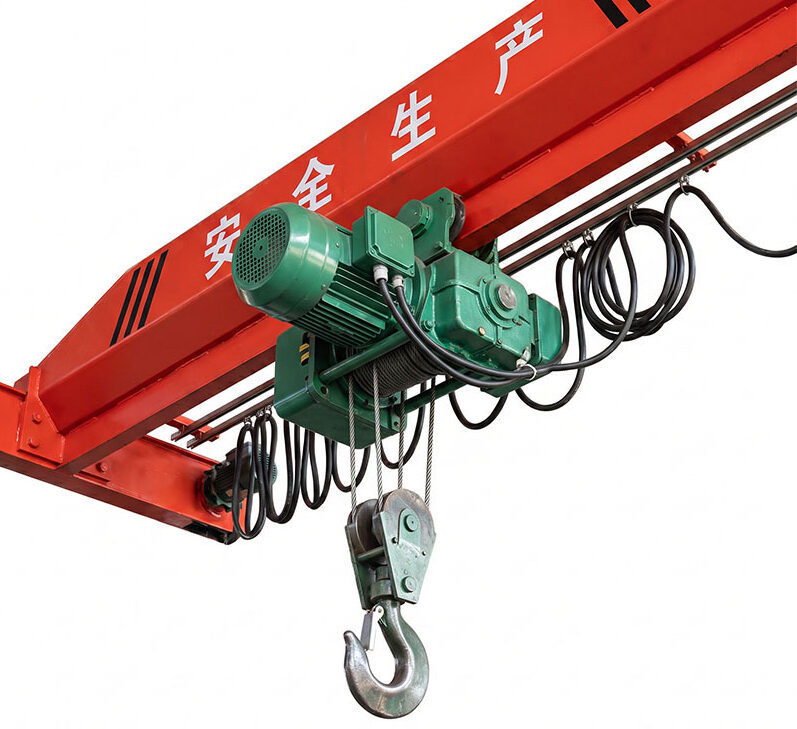
The hoisting mechanism is the heart of the crane. It comprises a motor, a gearbox, a drum, a brake, a wire rope, and a hook. The brake is critical for the safety of suspended loads; brake failure poses a risk of falling objects. The wire rope is subject to long-term cyclic loading, with wear and broken strands being common forms of deterioration that necessitate regular inspection and replacement. A high-quality gearbox operates with low noise and high transmission efficiency, helping to minimize equipment vibration and extend the overall service life of the unit.
Travel mechanism
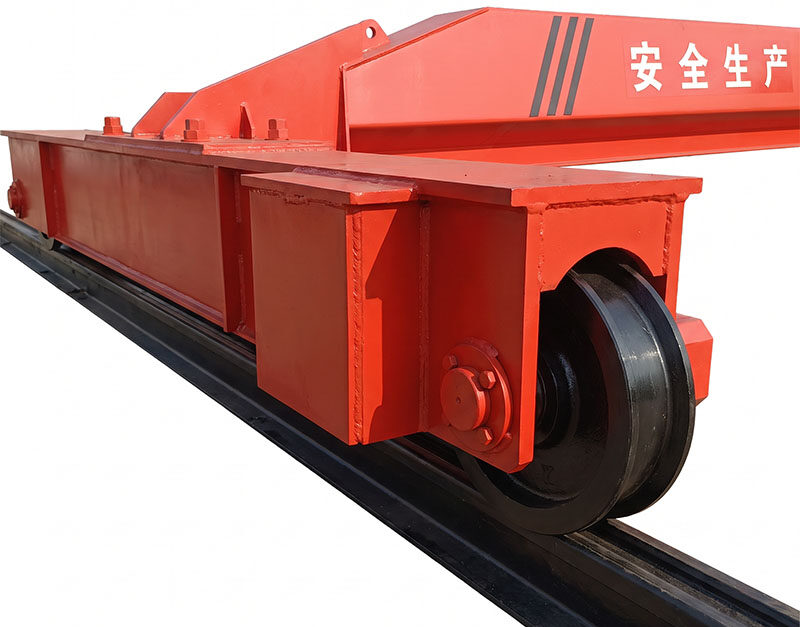
The travel mechanism is divided into the bridge travel mechanism (moving the bridge longitudinally along the workshop) and the trolley travel mechanism (moving the trolley transversely along the bridge girders); together, the wheels, drive motors, and anti-collision buffer devices form the complete travel system. Poor wheel material quality can lead to rail binding—causing excessive swaying and noise during operation—and may even severely damage the workshop’s rail structure. Buffers serve to prevent the bridge or trolley from crashing into the end stops and are essential safety components.
Electrical Control System
While traditional models rely on contactor-based controls, modern units have generally been upgraded to PLC control systems. Operation methods include handheld push-button controls, cab-based operation, and wireless remote control; the remote control mode allows operators to monitor lifting conditions from a safe vantage point, well away from the area beneath the load. Integrated safety features—such as overload limiters, upper and lower travel limiters, undervoltage protection, and emergency stop switches—instantly halt operations in the event of overloading, over-travel, or circuit abnormalities, thereby preventing accidents.
lifting gear
Use a hook for standard operations; switch to an electromagnetic chuck for handling steel; or use a grab bucket for handling bulk materials. The ability to flexibly change lifting attachments allows the same EOT crane to handle a wide variety of materials.
Strictly controlling the quality of these core components during the equipment procurement and maintenance phases can effectively reduce the risk of downtime due to failure in the future. For benchmarks based on internationally recognized safety and inspection standards for crane components, one can refer to OSHA’s official specifications for bridge and gantry cranes, which outline clear requirements regarding brakes, wire ropes, limit devices, and inspection intervals.
Common EOT Crane Faults and Troubleshooting
EOT cranes are specialized pieces of equipment subject to high-frequency usage; operating over extended periods in environments characterized by heavy loads, dust, and vibration, they are prone to various malfunctions. Rapidly diagnosing the causes of these faults helps minimize economic losses resulting from production line downtime while also mitigating safety risks.
Hoisting mechanism faults
Common issues include sluggish hook lifting/lowering, brake slippage, and a lack of response to lifting commands. If the load slips during lifting, the cause is usually brake wear or excessive brake clearance; operations under load must be stopped immediately to adjust the brake. If the hook fails to move at all, first check the motor power supply and whether the limit switches have been triggered—contact with the upper or lower limit switches will immediately cut off the lifting circuit. Wire ropes showing broken strands, deformation, or corrosion must be replaced promptly in accordance with regulations.
Travel mechanism faults
Issues such as abnormal noise, misalignment (causing rail binding), and jerky movement can occur during the operation of the crane or trolley. Rail binding is often caused by installation errors, wheel wear, or a lack of synchronization between the drive motors on either side; prolonged binding damages both the wheels and the rails and intensifies equipment vibration. If movement is jerky, first check for debris obstructing the rails and inspect the drive couplings for looseness. Damaged buffer stops at either end of the equipment should also be replaced promptly.
Electrical Control System Faults
Issues such as remote control failure, intermittent operation, and frequent tripping require attention. First, check the remote control’s battery and the signal receiver; dust accumulation in the environment can cause poor contact in contactors and relays. Frequent tripping necessitates an inspection for damaged wiring insulation, motor overload, or short circuits; do not arbitrarily remove overload protection devices to force continued operation.
EOT Crane Maintenance and Operational Safety
In the event of a malfunction, the priority is to shut down the machine and cut off the power supply. General operators should limit themselves to identifying symptoms; major electrical and mechanical overhauls must be performed by certified maintenance professionals. Conducting routine inspections to nip problems in the bud is far more important than scrambling for repairs after a breakdown occurs; additionally, the annual inspection requirements for special equipment must be strictly observed.
For factories requiring customized EOT crane designs, core component replacements, or full-lifecycle O&M support, Yuefeng Lifting offers a one-stop solution—spanning model selection and manufacturing to on-site installation and commissioning—helping enterprises ensure greater reliability regarding component quality and fault response.