
Table of Contents
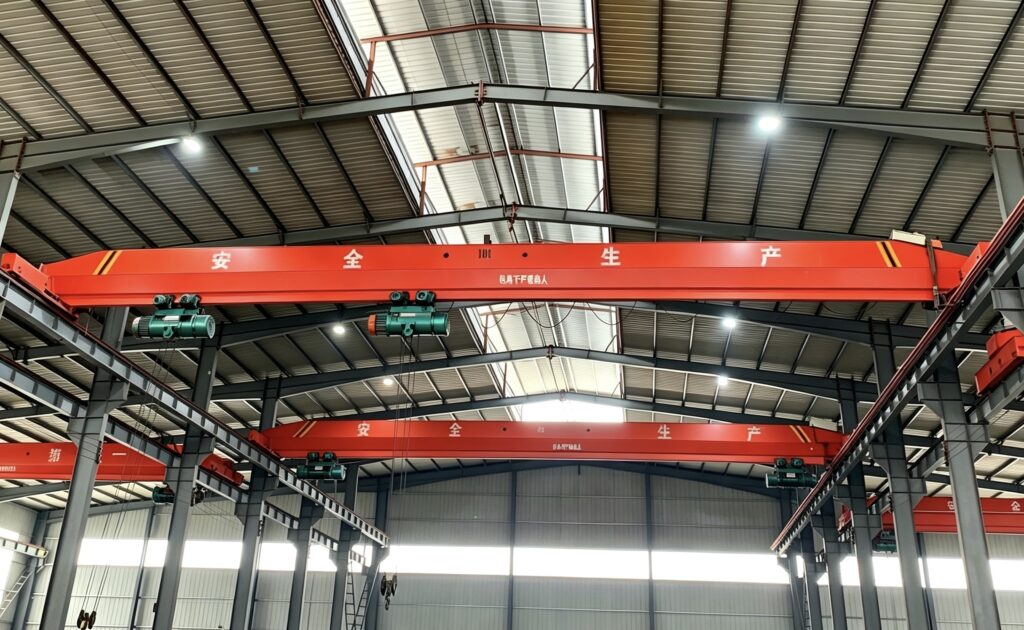
What Is a Warehouse Overhead Crane?
A warehouse overhead crane is a bridge-type lifting system designed to move heavy materials within a defined working area. It normally operates on elevated runway rails, allowing the crane to travel above the warehouse floor.
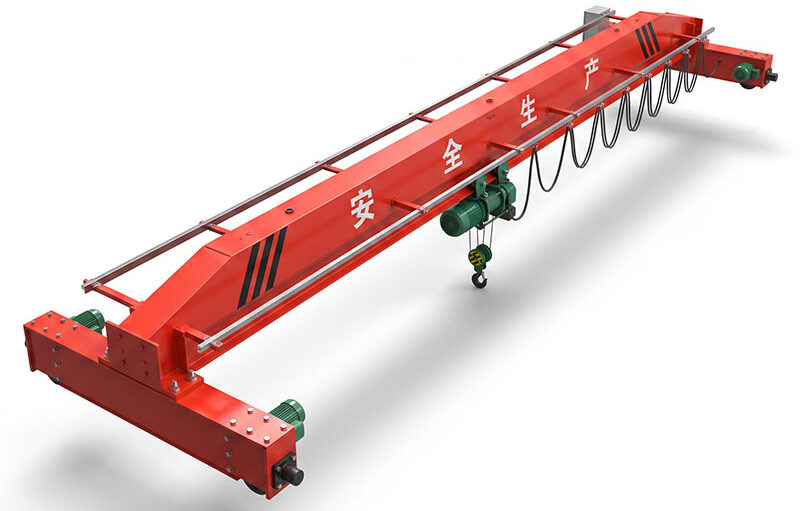
A typical system consists of a bridge girder, end trucks, electric hoist, trolley, hook, runway rails, electrical equipment, and control system.
The hoist provides vertical lifting, the trolley moves the load across the bridge, and the bridge travels along the runway. Together, these movements allow materials to be lifted, transported, and positioned efficiently.
For facilities handling steel products, machinery, molds, equipment, or other heavy goods, an overhead crane for warehouse applications can provide an effective alternative to relying entirely on forklifts or manual handling.
Why Use an Overhead Crane in a Warehouse?
Warehouse operators often need to balance storage capacity, transportation efficiency, and workplace safety.
Forklifts are suitable for many ground-level applications, but they require clear travel paths and floor space. When heavy or oversized products need to be moved regularly, an overhead lifting system can use the space above the floor instead.
Key advantages include:
Better Floor Space Utilization
Because the crane operates overhead, ground space can remain available for storage, vehicles, production areas, and workers.
Efficient Heavy Load Handling
Heavy components and oversized products can be lifted and transported with controlled mechanical movement.
Wider Working Coverage
A suitable bridge and runway system can cover multiple storage positions and working stations.
Flexible Design
Capacity, span, lifting height, travel speed, control method, and other specifications can be designed according to the warehouse layout.
How Does It Work?
An overhead crane for warehouse operations generally provides three main movements.
Lifting: The electric hoist raises or lowers the load.
Cross travel: The trolley moves the hoist horizontally along the bridge girder.
Long travel: The bridge travels along the runway rails.
For example, a warehouse may receive a heavy steel component at one entrance and need to move it to a storage position farther inside the building. The crane can lift the component, travel to the required location, and lower it into position.
This approach can make internal material flow more organized and reduce unnecessary ground transportation.
Main Warehouse Applications
An overhead crane for warehouse use can support many industries and material-handling processes.
Steel Storage
Steel plates, pipes, beams, coils, and fabricated structures often require mechanical lifting equipment.
Machinery Storage
Heavy machines, motors, gearboxes, and industrial components can be transferred between storage and production areas.
Manufacturing Facilities
Factories commonly use warehouse areas to store raw materials and finished products. A crane can connect storage areas with production lines.
Equipment and Parts Handling
Large molds, machinery components, and other heavy products can be positioned more accurately with suitable lifting equipment.
Logistics Operations
Specialized logistics facilities handling heavy goods can use bridge cranes for internal transportation and loading activities.
How to Choose the Right Crane
Selecting the right system requires more information than simply knowing the maximum load.
1. Lifting Capacity
Determine the heaviest load that needs to be lifted. The rated capacity should meet actual requirements without unnecessary oversizing.
2. Span
The span is the distance between the runway rails. It should correspond to the warehouse structure and required working area.
3. Lifting Height
Consider the required hook height and available building headroom. Low-headroom configurations can be useful where vertical space is limited.
4. Runway Length
The runway determines how far the bridge can travel. It should cover the required material-handling route.
5. Working Frequency
A crane used occasionally has different requirements from equipment operating throughout the working day. Duty cycle should be considered when selecting the hoist, motors, brakes, and electrical components.
6. Working Environment
Temperature, dust, humidity, corrosion, and other environmental conditions may affect the equipment configuration.
Single Girder or Double Girder?
The choice between a single-girder and double-girder design depends on the application.
A single girder crane has a relatively compact structure and is commonly used for light and medium-duty applications. It can be an economical choice when the required capacity, span, and working frequency are moderate.
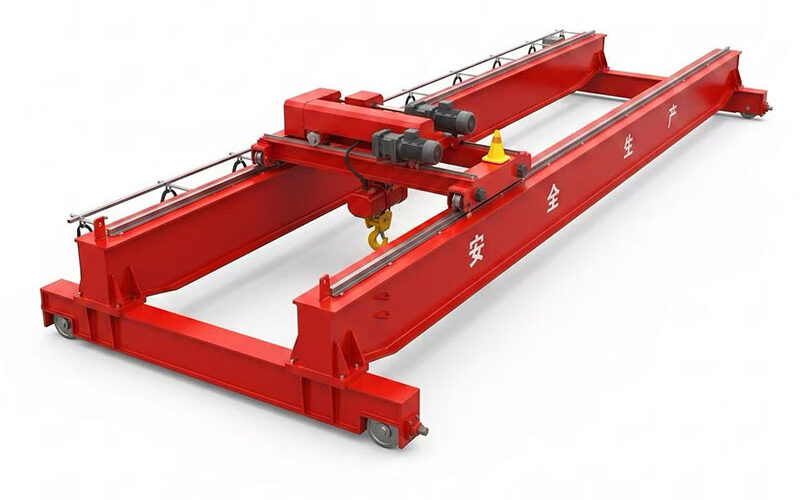
A double girder crane uses two main beams and generally provides greater structural capacity. It is often considered for heavier loads, larger spans, higher lifting heights, and demanding working conditions.
The best solution should be determined by technical requirements rather than simply choosing the largest available configuration.
Safety and Maintenance
Safe operation requires suitable equipment, trained operators, proper lifting accessories, inspection, and maintenance.
Before operation, important components such as hooks, wire ropes, brakes, controls, limit switches, electrical systems, and visible structural parts should be checked according to the applicable procedures.
Lifting operations should also be properly planned according to the working environment, load characteristics, lifting method, and potential risks. The UK Health and Safety Executive (HSE) recommends that lifting operations are properly planned by a competent person, appropriately supervised, and carried out safely. Its guidance also highlights the importance of equipment maintenance, inspection, and thorough examination.
For more detailed guidance, refer to the official HSE Lifting Operations resource.
In addition, regular preventive maintenance can also help identify component wear and reduce unexpected equipment downtime.
Choosing the Right Manufacturer
Selecting an experienced overhead crane manufacturer is important because warehouse lifting equipment is a long-term investment.
A professional supplier should be able to evaluate the complete application, including capacity, span, lifting height, runway length, duty class, building structure, headroom, power supply, and working environment.
Yuefeng Lifting provides customized bridge crane and gantry crane solutions for different industrial applications. Its product range includes single-girder cranes, double-girder cranes, gantry cranes, and other lifting equipment.
Partnering with yuefenglifting can also simplify technical communication, customized design, production negotiation, spare parts support, and after-sales service.
When comparing suppliers, customers should compare complete technical specifications rather than price alone.

Conclusion
An overhead crane for warehouse operations can be an efficient solution for facilities that regularly handle heavy or oversized materials.
By using the overhead working area, the crane can improve floor-space utilization while providing controlled lifting and horizontal transportation.
The right configuration depends on capacity, span, lifting height, runway length, duty cycle, headroom, and operating environment.
Whether a warehouse needs a compact single-girder system or a heavier double-girder solution, professional engineering and customized design can help ensure that the equipment matches the actual application.
For companies looking for reliable industrial lifting equipment, choosing an experienced manufacturer is an important step toward efficient and long-term material handling.