
When planning a new lifting system for a factory, warehouse, or workshop, overhead crane cost is often one of the first factors buyers consider. However, choosing the lowest-priced crane is not always the most cost-effective option. A crane with the wrong capacity, span, lifting height, or configuration may lead to higher installation, maintenance, and operating costs over time.
A better approach is to choose a crane that matches your actual working conditions and lifting requirements. Proper crane design can help control the initial investment while improving safety, efficiency, reliability, and long-term operating value.
In this guide, we’ll explore 7 practical ways to reduce overhead crane cost without sacrificing essential performance, helping you make a more informed decision when selecting a crane for your facility.
Table of Contents
1. Determine the Actual Load Capacity
The first step in controlling overhead crane cost is choosing the correct lifting capacity.
A crane should be capable of safely handling the maximum load required by the application. However, purchasing equipment with substantially more capacity than necessary can increase the size and cost of the bridge structure, hoist, motors, brakes, wheels, and electrical components.
For example, a workshop that normally handles moderate machinery components may not need the same crane configuration as a facility lifting very heavy steel assemblies.
Before requesting a quotation, identify:
- Maximum load weight
- Typical working load
- Load dimensions
- Lifting attachments
- Lifting frequency
- Future production requirements
The objective is not to select the smallest crane, but to select a properly engineered capacity.
2. Optimize the Crane Span
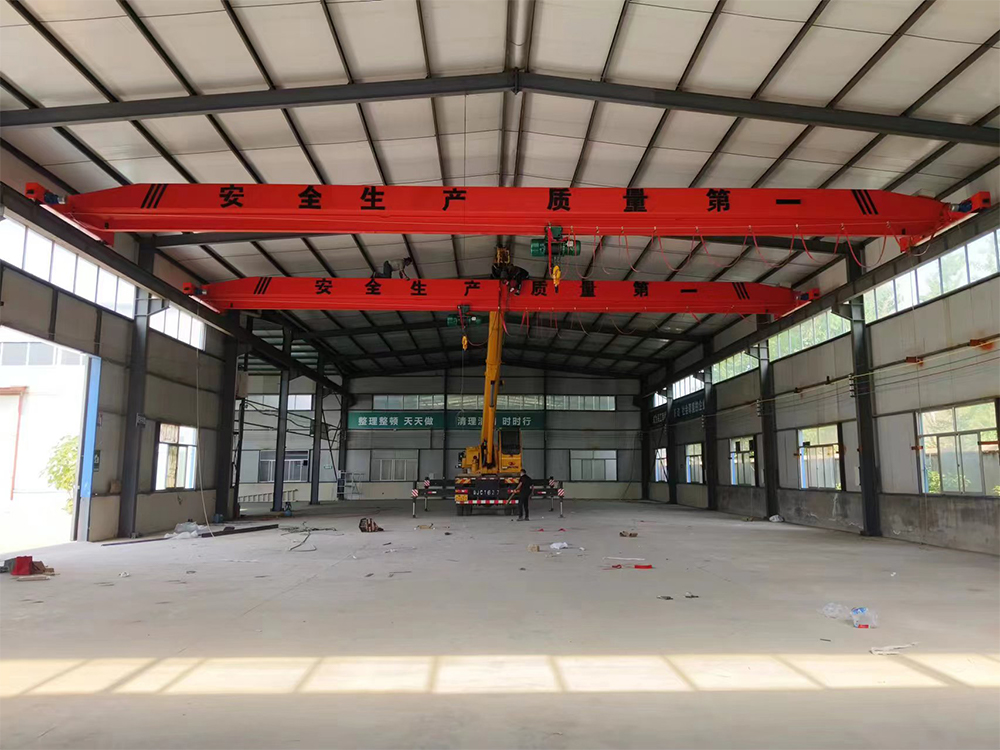
The crane span is another important factor affecting overhead crane cost.
A longer span may require a stronger bridge structure and can influence wheel loads, runway requirements, transportation, and installation.
Accurate workshop measurements can help engineers determine the span that provides sufficient working coverage without unnecessary structural requirements.
If you are building a new factory, crane dimensions should ideally be considered during the building design stage. Early planning can help coordinate the crane, columns, roof structure, and production equipment.
3. Select the Right Crane Design
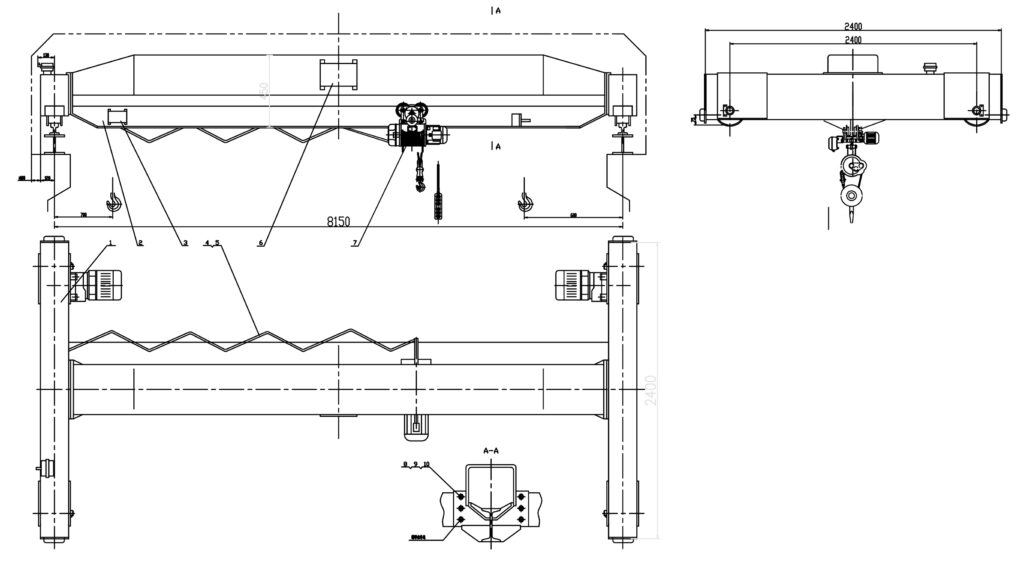
Different applications require different crane configurations.
A single-girder bridge crane can be a practical choice for many light- and medium-duty applications. Its compact design can help control equipment investment and make efficient use of workshop space.
A double-girder bridge crane is generally considered for heavier loads, larger spans, higher lifting requirements, or demanding industrial applications.
You can explore Yuefeng’s Bridge Crane product range to compare available configurations.
Choosing the correct structure is important because buying an oversized crane may increase the initial budget without providing useful additional capacity.
4. Consider Lifting Height and Headroom
Lifting height can also influence overhead crane cost.
A higher required hook height may affect hoist configuration, wire rope length, drum design, and available headroom.
Buyers should provide more than the total building height. Useful information includes:
- Required hook height
- Building height
- Roof structure
- Available headroom
- Existing equipment
- Required clearance
Yuefeng states that its bridge crane solutions can be customized for different spans, lifting heights, and headroom requirements. Proper engineering can help customers make better use of existing building space.
5. Match the Crane to Its Working Conditions
A crane used for occasional maintenance does not necessarily require the same configuration as one operating continuously on a production line.
Operating frequency, load spectrum, temperature, dust, humidity, corrosive substances, and outdoor exposure can all influence crane specifications.
These conditions may affect the selection of:
- Motors
- Brakes
- Electrical components
- Hoists
- Protective coatings
- Control systems
- Structural components
The goal should be to select equipment that is suitable for the real operating environment rather than adding expensive features that are not required.
6. Compare Complete Quotations
A low quotation does not automatically mean lower overhead crane cost.
Different manufacturers may include different components or services in their quotations.
When comparing suppliers, check whether the quotation covers:
- Main bridge structure
- Hoist
- Trolley
- Motors
- Electrical system
- Controls
- Safety devices
- Runway equipment
- Testing
- Transportation
- Installation
- Documentation
- Warranty
A quotation that appears cheaper may exclude important project items.
For this reason, buyers should compare complete technical specifications, not just the final price.
7. Consider Long-Term Operating Costs
The purchase price is only one part of the total investment.
Maintenance, spare parts, inspections, energy consumption, repairs, and downtime can influence the long-term economics of lifting equipment.
A reliable crane with suitable components may provide better value than a cheaper system that requires frequent repairs.
Regular maintenance is also essential. Hooks, ropes, brakes, wheels, electrical systems, and structural components should be inspected according to manufacturer recommendations and applicable requirements.
Why Professional Crane Design Matters
Every lifting application is different, and a standard crane is not always the right solution. At Yuefeng, we don’t simply sell standard cranes—we engineer lifting solutions based on your actual working conditions and operational requirements.
Our engineering team carefully evaluates key factors such as load capacity, span, lifting height, available workspace, operating environment, and control system. By considering these details from the beginning, we can develop a crane solution that delivers better safety, efficiency, reliability, and cost-effectiveness.
Professional crane design also means complying with relevant industry standards. For example, ASME B30.2 covers the construction, installation, operation, inspection, and maintenance of top-running overhead and gantry cranes.
Backed by 20+ years of crane manufacturing experience and 200+ technical professionals, Yuefeng combines professional engineering with a complete manufacturing and testing process. We provide custom gantry cranes and bridge cranes designed to meet the specific requirements of each application.
Your application. Your requirements. Our engineering solution.

FAQ
What is the biggest factor affecting crane price?
Lifting capacity is important, but span, lifting height, duty class, crane configuration, hoist specification, working environment, and customization can also significantly affect the quotation.
Is a single-girder crane cheaper than a double-girder crane?
A single-girder configuration can be more economical for suitable light- and medium-duty applications. A double-girder crane is generally designed for heavier or more demanding requirements.
How can I get an accurate quotation?
Provide the manufacturer with the required capacity, span, lifting height, runway length, operating frequency, working environment, and workshop drawings if available.
Conclusion
Managing overhead crane cost does not mean choosing the cheapest equipment available. A better approach is to eliminate unnecessary specifications while ensuring that the crane meets the required lifting, safety, and operating requirements.
By selecting the right capacity, optimizing the span, choosing the appropriate crane structure, and considering long-term operating expenses, industrial buyers can build a more practical and cost-effective lifting system.
For a customized quotation, customers can contact Yuefeng with their load information and workshop dimensions.