
Table of Contents
Why Material Handling Matters in Manufacturing
Efficient material handling is essential for modern manufacturing facilities. Raw materials, components, machinery, and finished products often need to be moved between storage areas, production lines, assembly stations, inspection zones, and loading areas.
When heavy materials are handled manually or with unsuitable equipment, production may become slower and less organized. Excessive floor traffic can also make it difficult to maintain an efficient workflow.
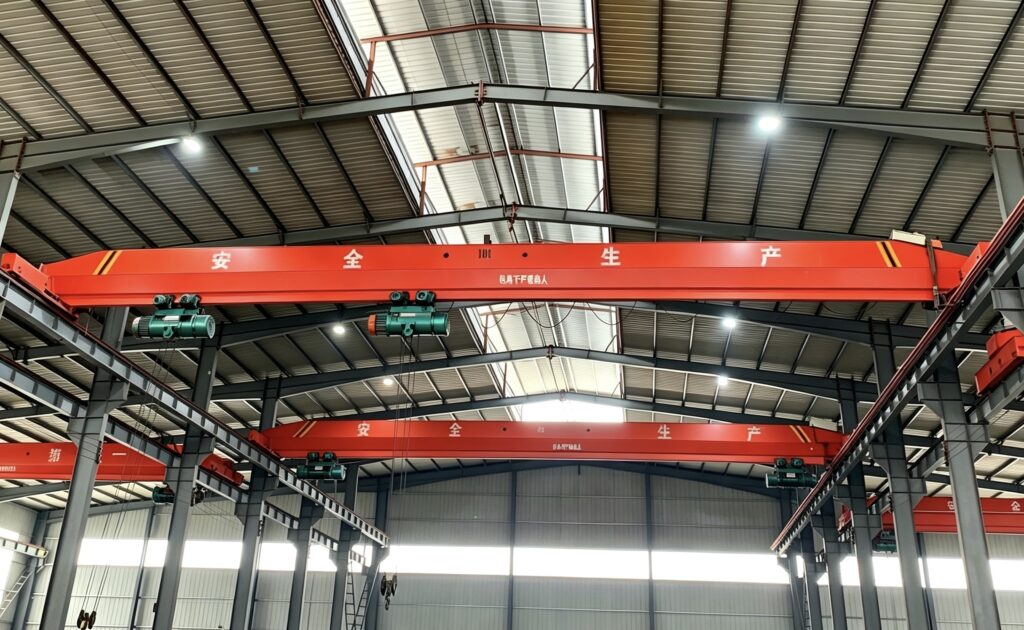
An overhead crane for manufacturing provides an effective way to move heavy loads within a defined working area. Because the lifting equipment operates above the factory floor, it can transport materials without occupying valuable ground space needed for workers, production equipment, forklifts, and vehicles.
For factories that regularly handle heavy machinery, steel products, molds, motors, equipment components, and industrial assemblies, a properly designed crane system can become an important part of the production process.
What Is an Overhead Crane for Manufacturing?
An overhead crane for manufacturing is a bridge-type lifting system designed to lift, lower, and move loads inside a factory, workshop, warehouse, or other industrial facility.
A typical system includes:
- Bridge girder
- End trucks
- Hoist
- Trolley
- Runway rails
- Electric motors
- Braking system
- Control equipment
- Hook and lifting accessories
The bridge travels along elevated runways, while the trolley moves across the bridge. The hoist performs the vertical lifting movement.
Together, these mechanisms allow operators to move loads in three basic directions: up and down, across the bridge, and along the runway.
The final configuration depends on several factors, including lifting capacity, crane span, lifting height, runway length, working frequency, available headroom, building structure, and operating environment.
How Does It Improve Manufacturing Operations?
An overhead crane for manufacturing can support different stages of the production process.
Moving Raw Materials
Steel plates, castings, metal components, machinery parts, and other materials can be difficult to move manually because of their weight or size.
A crane can transfer these materials from storage areas to designated workstations and help establish a more organized material flow.
Supporting Assembly Operations
Many industrial products require heavy components to be positioned during assembly.
Manufacturers may need to install motors, gearboxes, pumps, molds, machine housings, and other components. Controlled lifting equipment can help workers position these parts more efficiently.
Transporting Work-in-Process Materials
Materials may pass through several stages before becoming a finished product.
For example, a component may move from machining to welding, painting, assembly, and inspection. A crane can provide a dedicated lifting route between these areas.
Handling Finished Products
Large industrial products can be difficult to move using standard ground transportation.
A suitable crane can transfer finished machinery or equipment to storage and loading areas while reducing unnecessary floor traffic.
Supporting Equipment Maintenance
Heavy production equipment requires regular inspection and maintenance. Motors, pumps, gearboxes, and other components may need to be removed or replaced.
Having lifting equipment available within the workshop can make these operations more efficient and practical.
Common Applications in Manufacturing
An overhead crane for manufacturing can be used in many industries.
Machinery Manufacturing
Machinery factories often handle heavy metal components and large assemblies. Crane systems can support machining, assembly, maintenance, and finished equipment handling.
Steel and Metal Processing
Steel products and fabricated components can be heavy and difficult to transport manually. Bridge cranes are widely suitable for moving materials through production and storage areas.
Automotive Manufacturing
Automotive facilities may require lifting equipment for dies, molds, engines, tooling, machinery components, and maintenance work.
Industrial Equipment Manufacturing
Manufacturers producing generators, pumps, electrical equipment, compressors, and other large industrial products can use cranes throughout assembly and material handling processes.
Heavy Industrial Applications
Large components in power, metallurgy, mining, and other heavy industries may require high-capacity lifting systems designed for demanding operating conditions.
Key Benefits for Manufacturing Facilities
Better Use of Floor Space
One major advantage of an overhead crane for manufacturing is that the equipment operates above the production floor.
Unlike forklifts, which require ground-level travel routes, an elevated crane system allows factories to reserve more floor space for production lines, storage, workers, and vehicles.
Improved Material Flow
A well-planned crane system can connect different areas of a factory and reduce unnecessary material movement.
This can help create a more organized production process and improve the efficiency of internal logistics.
Reduced Manual Handling
Heavy loads can create significant physical demands on workers.
Mechanical lifting equipment allows suitable loads to be handled with appropriate lifting accessories and operating procedures, reducing dependence on manual movement.
Controlled Load Positioning
Manufacturing processes often require components to be positioned carefully.
Depending on the design, lifting and traveling speeds can be controlled to provide smoother load movement and better positioning.
Suitable for Different Load Capacities
Manufacturing facilities have different lifting requirements. Some may handle several-ton components, while others require equipment for much heavier machinery.
Crane structures and lifting mechanisms can be engineered according to the actual application.
Support for Multiple Workstations
One crane system can potentially serve several work areas within its operating range.
This can make it a practical solution for factories that need to move materials between multiple production stations.
Single Girder vs. Double Girder Cranes
Choosing between a single-girder and double-girder design is an important consideration when planning an overhead crane for manufacturing.
Single Girder Crane
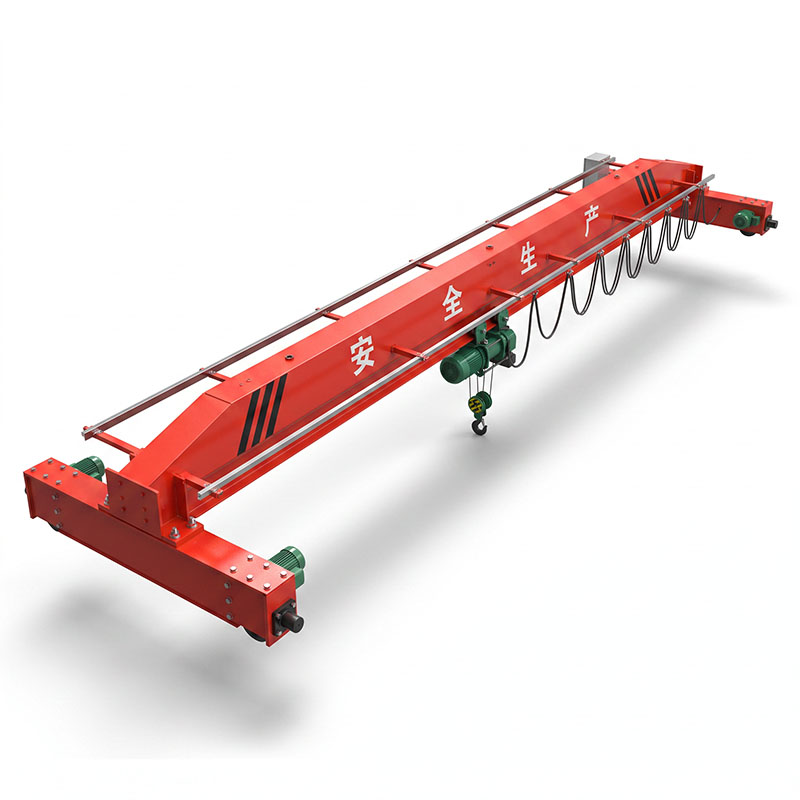
A single-girder crane uses one main bridge beam and is commonly suitable for light- and medium-duty applications.
It can be a practical choice for workshops and factories where the required capacity, span, and duty cycle fall within its design range.
Typical advantages include a relatively compact structure, efficient use of space, and potentially lower initial investment.
Double Girder Crane
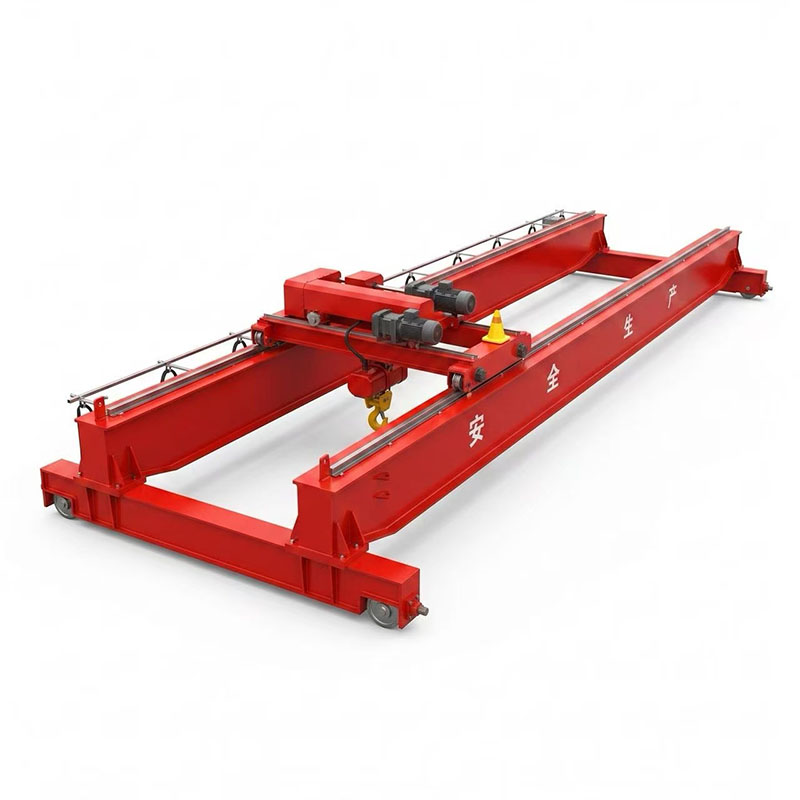
A double-girder crane uses two main bridge beams and is generally suitable for heavier loads, larger spans, higher lifting heights, or more demanding working conditions.
It can provide greater structural capacity and is commonly considered for heavy industrial applications.
The correct configuration should be determined according to engineering requirements rather than purchase price alone.
How to Choose the Right Crane
Before purchasing an overhead crane for manufacturing, buyers should provide accurate information about the intended application.
1. Lifting Capacity
Determine the maximum load as well as the typical working load. The weight of lifting accessories should also be considered.
2. Crane Span
The span is the distance between the runway rails. Accurate measurements are important for determining the appropriate bridge structure.
3. Lifting Height
Consider the required hook height and available headroom inside the building.
4. Working Frequency
Determine how often the equipment will operate and how many lifting cycles are expected during each shift.
5. Runway Length
The runway length should match the area that needs to be covered by the crane.
6. Working Environment
Temperature, dust, humidity, corrosive substances, outdoor exposure, and potentially hazardous conditions may influence equipment selection.
7. Control Method
Depending on the application, manufacturers may choose pendant controls, radio remote controls, cabin operation, or variable-frequency control.
8. Building Structure
The factory’s columns, runway supports, roof structure, headroom, and available structural capacity should be evaluated before installation.
Safety Considerations
Safety should be considered during design, installation, operation, inspection, and maintenance.
An overhead crane for manufacturing should always be operated according to the manufacturer’s instructions and applicable local regulations.
Important practices include:
- Never exceed the rated capacity.
- Inspect equipment before operation.
- Use suitable lifting accessories.
- Keep workers away from suspended loads.
- Train operators properly.
- Carry out regular maintenance.
- Report unusual noise, vibration, or movement.
- Maintain clear communication during lifting operations.
Regular inspection is particularly important for cranes working frequently or under demanding industrial conditions.
Why Customized Design Matters
Every manufacturing facility has a different building structure, production layout, and material-handling process.
For this reason, a standard lifting system may not always provide the most suitable solution.
A customized overhead crane for manufacturing can be designed according to:
- Load capacity
- Crane span
- Lifting height
- Runway length
- Working class
- Travel speed
- Lifting speed
- Available headroom
- Building structure
- Power supply
- Control requirements
- Working environment
Customized design is particularly valuable when a factory has limited headroom, unusual building dimensions, heavy loads, or specialized production requirements.
A professional crane manufacturer can evaluate these factors and develop a solution that matches the actual working conditions.
Conclusion
An overhead crane for manufacturing can play an important role in modern industrial material handling. By operating above the factory floor, it can help manufacturers move heavy materials efficiently while making better use of available production space.
From raw material handling and machine assembly to finished-product transportation and equipment maintenance, crane systems can support many different manufacturing processes.
However, selecting the right equipment requires more than considering lifting capacity. Span, lifting height, working frequency, runway length, building structure, control method, and working environment should all be evaluated.
The best crane is not necessarily the largest or most expensive option. It is the system that is properly matched to the factory’s actual production requirements.
For manufacturers planning a new lifting system or upgrading an existing facility, working with an experienced crane manufacturer can help ensure that the equipment is designed for reliable and efficient operation.
Frequently Asked Questions
What is an overhead crane for manufacturing?
An overhead crane for manufacturing is a bridge-type lifting system used to lift, move, and position heavy materials, machinery, components, and finished products inside a manufacturing facility.
What are overhead cranes used for in factories?
They can be used for raw material handling, machine assembly, work-in-process transportation, finished-product handling, equipment maintenance, and internal logistics.
Should I choose a single-girder or double-girder crane?
A single-girder crane is often suitable for light- and medium-duty applications. A double-girder crane may be more appropriate for heavier loads, larger spans, greater lifting heights, or demanding duty conditions.
How do I select a manufacturing crane?
Start with the required lifting capacity, span, lifting height, runway length, working frequency, headroom, building structure, operating environment, and control method. A professional manufacturer can use these specifications to develop the appropriate design.
Can manufacturing cranes be customized?
Yes. Crane systems can be customized according to the factory layout, load requirements, lifting height, span, duty cycle, control system, and working environment.
Why use an overhead crane instead of a forklift?
An overhead crane operates above the factory floor, allowing more floor space to remain available for production and storage. It can also be particularly useful for heavy, oversized, or frequently handled loads within a fixed working area.