
Regular inspection and maintenance of gantry cranes are essential for ensuring lifting safety, maintaining reliable equipment operation, and extending service life. Issues such as wire rope wear, brake malfunctions, damaged electrical components, or structural defects—if left unaddressed over time—can increase the risk of equipment failure and unplanned downtime.
Establishing a preventive maintenance program helps to identify potential defects early, reduce repair costs, and enhance operational reliability. This article outlines the key inspection items and maintenance procedures for gantry cranes.
Table of Contents

Why Gantry Crane Inspection Matters
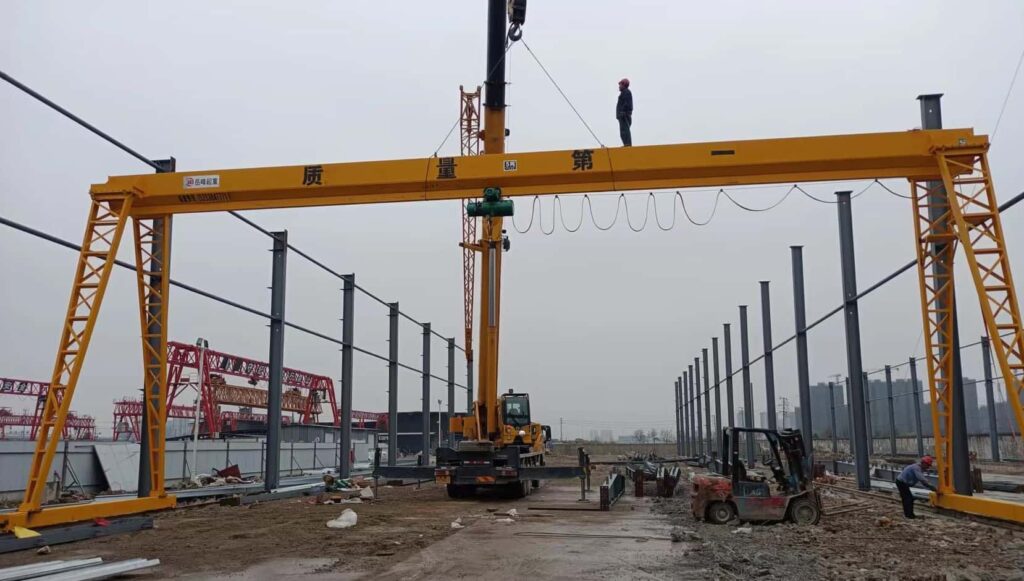
A gantry crane consists of several critical systems, including the main girder, support legs, hoisting mechanism, wire ropes, brakes, wheels, and the electrical control system.
Defects in any key component can compromise the crane’s operational performance and safety. Regular inspections enable operators and maintenance personnel to identify irregularities before they escalate into more serious issues.
The frequency of inspections should be determined based on the manufacturer’s recommendations, the intensity of equipment usage, the operating environment, and applicable regulations.
Daily Gantry Crane Inspection Checklist
Before operation, operators must complete the prescribed pre-use inspections. More detailed inspections should be conducted by qualified personnel at specified intervals.
Main Structure and Connections
Inspect the main girders, support legs, welded joints, and bolted connections for visible cracks, deformation, corrosion, loose bolts, or other signs of damage.
If structural defects are suspected, the equipment must be evaluated by qualified personnel and confirmed safe before it can be returned to service.
Wire Ropes, Hooks, and Slings
Check wire ropes for broken strands, kinks, corrosion, and excessive wear.
Inspect hooks and slings for cracks, deformation, or other defects.
Damaged lifting accessories must be taken out of service and either evaluated or replaced in accordance with applicable safety standards.
Brakes and Hoisting Mechanism
Verify that the brakes can reliably stop and hold a load.
During authorized functional checks, observe for any abnormal noise, unusual vibration, or unstable operation.
If braking performance is unreliable, the crane must be taken out of service until the fault has been properly addressed.
Electrical System and Safety Devices
Following the manufacturer’s operating procedures, inspect cables, electrical control cabinets, control units, limit switches, emergency stop devices, and alarm systems.
Any electrical defects or malfunctions in safety devices that could compromise safety must be resolved before normal operation is resumed.
Daily Inspection Checklist
| Component | What to inspect |
| Main girder and legs | Cracks, deformation, corrosion |
| Welds and bolts | Visible defects and loose connections |
| Wire ropes | Broken wires, kinks, wear |
| Hooks and slings | Cracks, deformation, damage |
| Brakes | Reliable stopping and holding |
| Motors and gearboxes | Abnormal noise, heat, vibration |
| Wheels and rails | Damage, wear, obstructions |
| Electrical system | Damaged cables and control faults |
| Safety devices | Limit switches, emergency stops, alarms |
Inspection results should be recorded, and any defects that could affect the safe operation of the equipment must be reported promptly.
Key Maintenance Tasks for Gantry Cranes
Lubrication of Moving Parts
Bearings, gears, wheels, and other designated components require lubrication with appropriate lubricants at specified intervals.
Factors such as dust, humidity, outdoor exposure, and the presence of corrosive substances may increase maintenance requirements.
Maintenance schedules should be developed based on the manufacturer’s lubrication recommendations, rather than by rigidly adhering to fixed intervals that may not suit actual operating conditions.
Before performing maintenance, hazardous energy sources must be isolated, and measures must be taken to prevent any accidental movement of the equipment.
Maintenance of Wire Ropes and Hooks
Wire ropes may gradually deteriorate due to repeated bending, friction, corrosion, and overloading. Hooks may also develop cracks, undergo deformation, or experience excessive wear.
These components must be inspected in accordance with applicable inspection standards and criteria for retirement from service. Defective parts should be replaced promptly; the use of improper, makeshift methods to repair critical lifting components is strictly prohibited.
3.3 Inspection of Brakes, Motors, and Gear Reducers
Inspect the braking system, motors, gear reducers, and couplings for signs of abnormal noise, overheating, vibration, oil leaks, or irregular operation.
The braking system must be capable of reliably stopping and holding a load under the operating conditions for which the equipment was designed.
Repairs or adjustments involving critical components must be performed by qualified maintenance personnel.
Maintenance of Electrical Systems
In accordance with the maintenance schedule, inspect control cabinets, cables, connectors, grounding devices, and protective equipment.
Electrical maintenance must be carried out by qualified personnel only after the relevant energy sources have been isolated and the area has been confirmed safe.
Corrosion Protection for the Crane Structure
Outdoor gantry cranes are frequently exposed to rain, moisture, temperature fluctuations, and potentially corrosive substances.
Inspect main girders, support legs, weld seams, and bolted connections for signs of corrosion, cracks, or deformation.
Protective coatings should be maintained as necessary. If any structural defects are suspected, a professional should be consulted to conduct an assessment.
Best Practices for Preventive Maintenance
Establish a Maintenance Plan
Develop a maintenance plan based on equipment usage frequency, operating conditions, manufacturer recommendations, and applicable regulations.
Maintain records of equipment inspections, lubrication, repairs, and component replacements to identify recurring issues and continuously monitor the condition of the equipment.
Use Appropriate Replacement Parts
Replacement parts must comply with the technical specifications of the crane.
The use of unsuitable parts can compromise equipment performance, operational reliability, and safety.
Train Maintenance Personnel
Personnel responsible for inspections and repairs must be familiar with the crane’s key components, maintenance procedures, energy isolation requirements, and the process for reporting defects.
Address Equipment Issues Promptly
Do not ignore signs such as abnormal noise, excessive vibration, brake malfunctions, damaged cables, or structural irregularities.
Timely assessment and repair can prevent minor issues from escalating into serious failures.
For further guidance on planning and managing safe lifting operations, please refer to the official resources provided by the UK Health and Safety Executive (HSE): Guidance on Safe Lifting Operations.
Conclusion
Regular inspection and maintenance of gantry cranes help improve operational reliability, reduce unplanned downtime, and extend the equipment’s service life.
Every critical component—from wire ropes and hooks to braking systems, electrical controls, and load-bearing structures—should be inspected and maintained in accordance with the manufacturer’s requirements and applicable safety regulations.
Shandong Yuefeng Crane Machinery Co., Ltd. specializes in the production of overhead and gantry cranes for a wide range of industrial applications. We provide customized lifting equipment solutions tailored to your specific requirements, including lifting capacity, span, lifting height, and operating environment.
We invite you to visit our gantry crane product page to learn more about our equipment, and please feel free to contact us to discuss your project needs.
Disclaimer: This text is provided for general reference only and is not a substitute for the manufacturer’s maintenance manual, professional inspections, or compliance with applicable local regulations.