
The EOT crane (Electric Overhead Travelling Crane)—often referred to simply as an overhead crane—is a common piece of material handling equipment in modern industrial facilities. Operating via a rail system installed in the upper part of the facility, it enables the lifting, lateral movement, and longitudinal transport of heavy loads. These cranes are widely used in sectors such as machinery manufacturing, automotive production, steel structure fabrication, and warehousing logistics. Unlike ground-based handling equipment like forklifts, EOT cranes utilize overhead space to transport heavy loads, thereby minimizing the obstruction of floor-level aisles and improving overall workshop space utilization.
Table of Contents
Main Structure and Working Principle of EOT Cranes
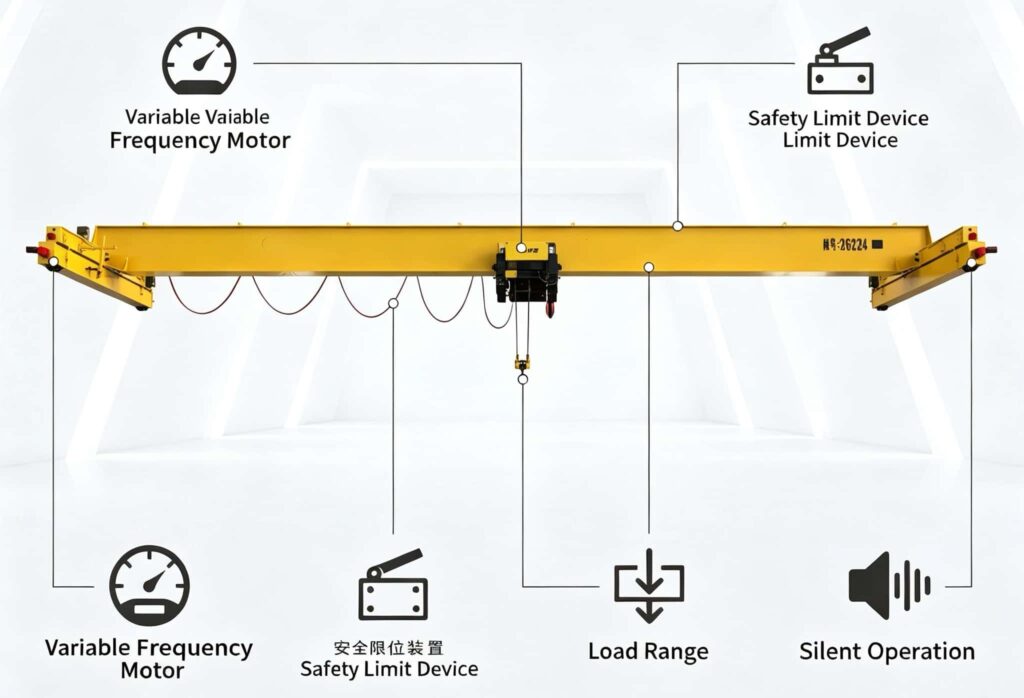
A typical EOT crane primarily consists of the following components:
Main girders and end carriages:
Form the crane bridge structure, bearing the load and supporting the travel mechanisms.
Hoisting trolley and electric hoist:
Responsible for lifting the hook and moving it laterally along the main girders.
Bridge travel mechanism:
Drives the entire crane to move longitudinally along the tracks in the facility.
Electrical control system:
Controls equipment operation and incorporates appropriate safety protection devices as specified in the design.
By utilizing movement across three axes—hoisting, trolley travel, and bridge travel—the EOT crane can transport heavy loads to designated locations within the facility. Depending on production requirements, features such as variable frequency speed control and wireless remote control can also be configured.
Common Types of EOT Cranes
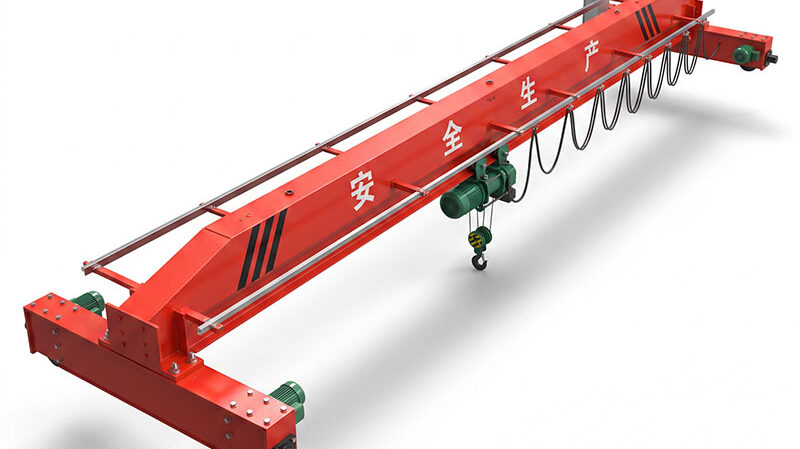
Electric single-girder crane
Single-girder cranes utilize a single main girder as the primary load-bearing structure and are typically equipped with an electric hoist; they are characterized by a relatively simple structure, lower dead weight, and lower procurement costs.
They are suitable for a wide range of standard industrial facilities, assembly workshops, and warehouses. Specific model selection requires consideration of factors such as lifting capacity, span, lifting height, and operating frequency.
Electric double-girder crane
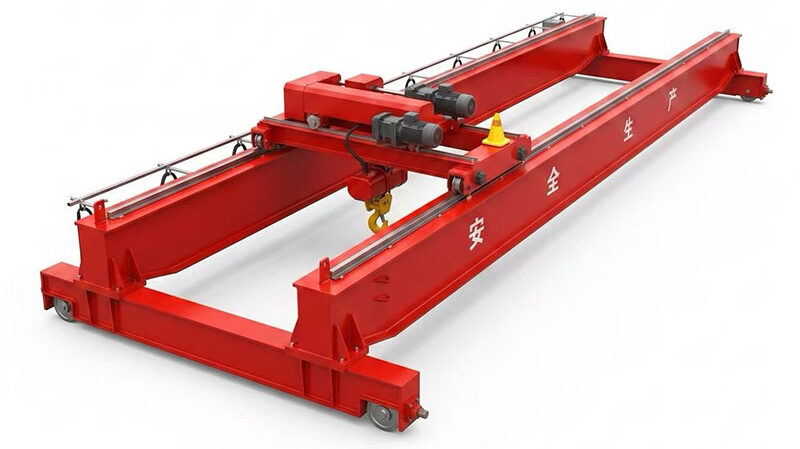
Double-girder cranes utilize two main girders for load-bearing and are typically equipped with a hoisting trolley or a specialized lifting mechanism; they are suitable for applications requiring higher load capacities, greater lifting heights, or more intensive duty cycles.
They are commonly found in sectors such as heavy machinery manufacturing, steel processing, and large-scale equipment production.
Both single-girder and double-girder cranes have their own specific ranges of application; equipment suitability should not be determined solely by tonnage, but rather by considering actual operating conditions.
Key Considerations for Purchasing an EOT Crane
When selecting an electric bridge crane, in addition to price, the following factors should also be given primary consideration:
Rated lifting capacity and span:
Determine the maximum lifting weight, factory span, and lifting height.
Duty Class:
Select the appropriate configuration based on daily operating time, lifting frequency, and actual operational intensity.
Core components:
Focus on the quality of the electric hoist, motor, reduction mechanism, brake, and electrical system.
Manufacturing Qualifications and Safety:
Verify the manufacturer’s qualifications, product documentation, and applicable inspection requirements.
After-sales service:
Inquire about installation and commissioning, warranty periods, spare parts supply, and repair response capabilities.
When purchasing an electric bridge crane, attention should be paid to manufacturing qualifications, equipment safety, and inspection requirements. Relevant technical requirements can be found in Safety Technical Regulations for Lifting Machinery” issued by the State Administration for Market Regulation
Development Trends of EOT Cranes
With the advancement of industrial automation, technologies such as variable-frequency control, wireless remote control, and operational status monitoring are increasingly being applied to electric bridge cranes. These features help enhance the operating experience, improve operational stability, and facilitate equipment maintenance.
When selecting equipment, enterprises should comprehensively consider procurement costs, production efficiency, safety, and long-term maintenance expenses.
Summary and Product Inquiry
EOT (Electric Overhead Traveling) cranes are essential equipment for efficient material handling in industrial facilities. Whether choosing a single-girder or double-girder crane, it is important to consider key factors such as lifting capacity, span, lifting height, duty class, and operating environment to ensure safe, reliable, and efficient operation.
If you are looking for a reliable solution for your material handling needs, explore our EOT Crane Products to learn more about our single-girder cranes, double-girder cranes, and customized overhead crane solutions.
As an experienced crane manufacturer, Yuefeng Lifting can help you select a suitable crane configuration based on your project requirements. Share details such as lifting capacity, span, lifting height, application, and frequency of use, and our team can assist you with equipment selection, customized solutions, installation guidance, and after-sales support.
Looking for the right EOT crane for your project?
Contact our team today to discuss your requirements and get a customized solution for your facility.