
Table of Contents
Introduction
A bridge crane is a core lifting solution for workshops where efficiency, precision, and safety are critical to daily operations. As production volumes increase and manual handling becomes a limiting factor, more workshops rely on overhead crane systems to streamline material flow and reduce operational risk.
Unlike floor-based lifting equipment, bridge cranes utilize overhead space to move loads seamlessly across the entire workshop. This makes them especially suitable for facilities handling heavy components, repetitive lifting tasks, or complex assembly processes.
In this guide, you’ll learn how bridge cranes work, where they deliver the most value, and how to select a system that aligns with your workshop’s real operating conditions.
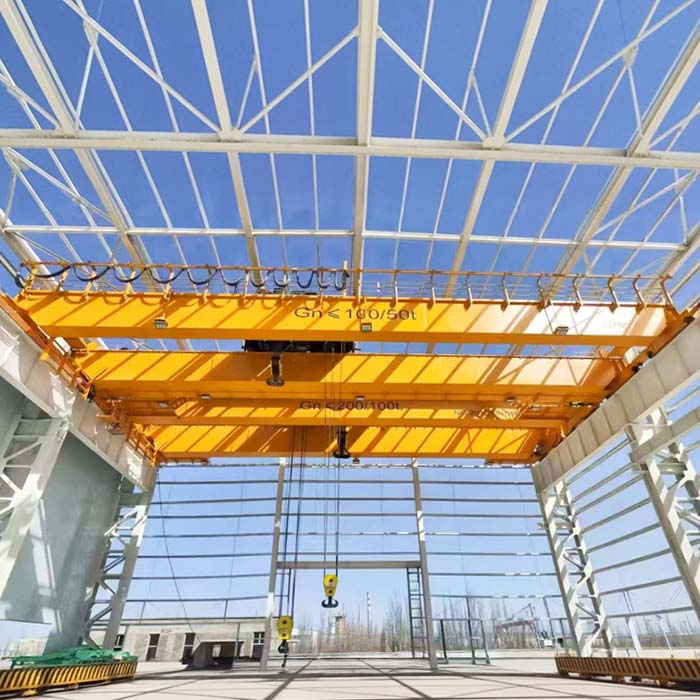
What Is a Bridge Crane
A bridge crane, often referred to as an overhead crane, consists of a bridge beam that travels along runway rails mounted on the workshop structure. A hoist moves along the bridge, enabling vertical lifting and horizontal load movement within a defined coverage area.
Because the crane operates above the working floor, it eliminates the need for ground-level lifting paths. This allows materials, tools, and equipment to be transported efficiently without disrupting other operations, making bridge cranes a foundational system in modern workshops.
Why Bridge Cranes Improve Workshop Efficiency
Bridge cranes significantly reduce non-value-added movement in workshops. Instead of relying on forklifts or manual handling, operators can move loads directly from one workstation to another using a single lifting system.
This reduction in handling steps leads to faster cycle times, fewer bottlenecks, and more predictable workflows. In high-throughput workshops, even small efficiency gains per lift can translate into substantial productivity improvements over time.
Core Advantages of Bridge Cranes in Workshops
Full Area Coverage
Bridge cranes provide continuous coverage across the workshop span, ensuring that any load within the working zone can be accessed without repositioning equipment.
Improved Load Control
Electric hoists combined with stable bridge movement allow precise load positioning, which is essential for assembly, machining, and alignment tasks.
Reduced Floor Congestion
By moving lifting operations overhead, bridge cranes free up floor space, improving traffic flow and reducing collision risks.
Long-Term Reliability
Designed for repetitive operation, bridge cranes handle high duty cycles with consistent performance when properly specified and maintained.
Main Types of Bridge Cranes
Single Girder Bridge Crane
Single girder bridge cranes use one main beam with the hoist suspended beneath it. They are commonly installed in workshops with light to medium lifting requirements.
This configuration offers lower structural load on the building, simpler installation, and reduced upfront cost. It is well suited for workshops focused on general manufacturing, assembly, and routine material handling.
Double Girder Bridge Crane
Double girder bridge cranes feature two parallel beams with the hoist running on top. This design allows for higher lifting capacity, increased lifting height, and improved stability.
Workshops handling heavy machinery, large fabricated components, or continuous lifting operations typically rely on double girder systems for their robustness and long service life.
Typical Bridge Crane Applications in Workshops
Production Line Support
Bridge cranes enable consistent material supply to production lines, minimizing downtime caused by delayed handling or repositioning.
Precision Assembly
During assembly operations, precise lifting and placement reduce alignment errors and improve overall product quality.
Mold, Die, and Tool Handling
Bridge cranes are frequently used to move molds, dies, and tooling safely, reducing operator strain and preventing damage to high-value assets.
Maintenance Operations
For workshops performing frequent maintenance, bridge cranes simplify the removal and installation of heavy components, shortening service intervals.
Key Technical Specifications to Evaluate
| Specification | Why It Matters |
|---|---|
| Load capacity | Ensures safe handling of maximum operational loads |
| Span | Determines how much of the workshop can be covered |
| Lifting height | Affects clearance for equipment and stacking |
| Duty class | Indicates suitability for operating frequency |
| Hoist speed | Impacts productivity and control accuracy |
| Control method | Influences operator comfort and safety |
Selecting specifications based on actual usage patterns rather than theoretical maximums helps avoid oversizing and unnecessary cost.

Safety Features That Directly Impact Daily Operations
Modern bridge cranes integrate multiple safety systems to protect both operators and equipment. These include overload protection, upper and lower travel limits, emergency stop functions, and reliable braking mechanisms.
Smooth start and stop functions reduce load swing, which not only improves safety but also minimizes mechanical stress on crane components. Workshops that prioritize preventive maintenance and operator training consistently report fewer incidents and longer crane service life.
Bridge Crane vs Alternative Lifting Solutions
Compared with forklifts, bridge cranes offer greater lifting precision and eliminate the need for floor traffic during lifting operations. Compared with gantry cranes, bridge cranes provide permanent coverage without occupying floor space with support legs.
For workshops with suitable building structures, bridge cranes often represent the most efficient long-term lifting solution.
Cost Factors and Return on Investment
The cost of a bridge crane depends on capacity, span, duty class, and customization. While the initial investment may appear higher than mobile solutions, the long-term return is typically superior.
Reduced labor requirements, faster handling times, lower accident risk, and extended equipment lifespan contribute to measurable cost savings over the crane’s operational life.
Common Mistakes When Selecting a Bridge Crane
One common mistake is selecting capacity based solely on occasional peak loads rather than regular operating conditions. This can lead to unnecessary expense.
Another frequent issue is underestimating duty class requirements, resulting in premature wear. Proper assessment of lifting frequency and load cycles is essential for reliable performance.
How to Choose the Right Bridge Crane for Your Workshop
Start by analyzing your heaviest loads and how often they are lifted. Consider workflow patterns, production growth plans, and any constraints imposed by the building structure.
Evaluate available headroom, runway installation options, and power supply conditions. Choosing a crane with a reasonable capacity and performance margin allows your workshop to adapt to future needs without major upgrades.
Working with an experienced supplier who provides engineering support, documentation, and after-sales service is a critical part of a successful crane project.
Conclusion
A bridge crane is a strategic investment for workshops seeking higher efficiency, improved safety, and reliable material handling. By understanding crane types, applications, and selection criteria, you can choose a system that delivers long-term operational value.
If you are planning to install or upgrade a bridge crane in your workshop, contact us today. Our technical team can help you design a lifting solution that fits your workflow, space, and growth plans.
FAQ
Is a bridge crane suitable for workshops with limited space?
Yes. Bridge cranes maximize overhead space and minimize floor obstruction, making them ideal for space-constrained workshops.
How does duty class affect crane lifespan?
Duty class reflects how frequently the crane operates. Selecting the correct class ensures components are designed for the expected workload.
Can bridge cranes be customized for specific workflows?
Yes. Bridge cranes can be tailored in capacity, span, lifting height, controls, and safety features.
What maintenance does a bridge crane require?
Routine inspection, lubrication, and electrical checks are essential to ensure safe and reliable operation.