
Semi gantry crane improves material handling productivity for workshops, fabrication yards and loading zones. However, its distinctive asymmetric single-leg layout brings different safety challenges compared with double-leg full gantry cranes or overhead travelling cranes. Without proper control, risks such as wheel derailment, structural cracks, overload failure and wind-induced overturning may occur. Standardised operation, periodic inspection and planned maintenance are essential to protect staff and extend crane service life. This guide sorts out compulsory safety devices, core operating rules and a clear inspection checklist for daily, weekly and monthly routines, serving crane operators, site safety supervisors and maintenance engineers.
Table of Contents
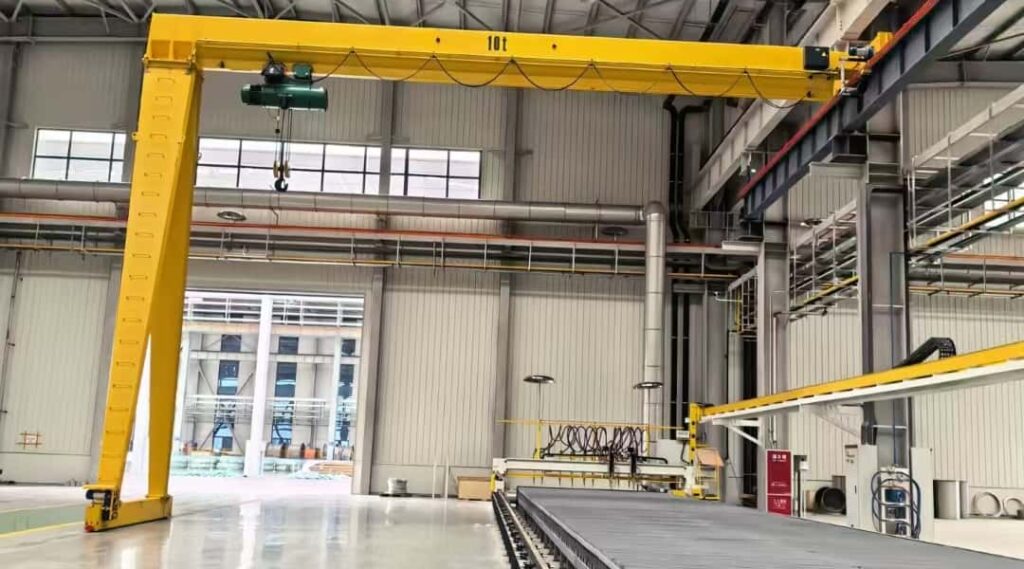
Compulsory Safety Devices for Standard Semi Gantry Crane
No semi gantry crane can be put into normal operation without a full set of certified safety protection devices. These components act as the first line of defence against lifting accidents.
- Overload limiter: It automatically cuts off the hoisting power once the lifted load exceeds the rated capacity, preventing permanent deformation of the main girder and supporting leg caused by overload.
- Upper & lower lifting limit switches: They stop the hoist movement to avoid the hook striking the hoist drum or dropping out of control.
- Travel limit switch + buffer stopper: Installed at both ends of the runway rail, these parts prevent the crane and trolley from hard collision with the rail end stops.
- Emergency stop button: Available on both wireless remote controller and pendant control station, for immediate power shutdown in emergencies.
- Anti-derailment device: This is especially critical for the single-leg travelling end carriage, to stop wheels jumping off the ground rail under lateral force.
- Wind protection assembly (outdoor type): Including rail clamps and anchoring devices. Operators must lock these devices firmly when the crane is idle or under strong wind conditions.
- Electrical protection system for control cabinet: Built-in phase loss, over current and low voltage protection to avoid motor and circuit burnout.
Standard Safe Operation Rules for Semi Gantry Crane
All operators must receive formal professional training and understand the structural characteristics of semi gantry cranes before operation. Due to its asymmetric support, semi gantry cranes are far more sensitive to side pulling than ordinary gantry cranes.
- Never lift loads with unknown weight or work beyond the rated tonnage.
- Strictly forbid side dragging or oblique pulling of loads. Swing from side pulling creates extra horizontal force concentrated on the single supporting leg and building runway, which easily triggers derailment or structural damage.
- Complete pre-start check before every shift: test emergency stop, brake performance and limit switches, and check wheel and rail conditions.
- Keep slings and the hook vertical during lifting.
- For outdoor semi gantry cranes, suspend all lifting work and lock the rail clamps once wind speed exceeds the designed threshold.
- No personnel are allowed to stand or walk under suspended loads at any time.

Daily, Weekly and Monthly Maintenance Checklist
Regular maintenance follows fixed cycles, with different responsibilities assigned to operators and maintenance technicians.
Daily Inspection (Before each shift, operator’s responsibility)
Check abnormal running noise of travelling wheels and electric hoist; test brake response; examine hooks and wire ropes for broken wires, corrosion or abrasion; check loose bolts on supporting leg and end carriage; inspect damage of cables and pendant controller; test emergency stop function.
Weekly Inspection (Maintenance technician)
Retighten connecting bolts between main girder and supporting leg; inspect rail fixing bolts and rail gaps; check buffers and anti-collision rubber blocks; remove dust inside the electrical cabinet; add lubricant for wheel bearings and trolley wheels.
Monthly Inspection
Full visual inspection on welding seams and paint condition of main girder and supporting leg to find cracks or deformation; check the connection condition of the building-side runway beam; calibrate the overload limiter; test the locking performance of wind rail clamps for outdoor semi gantry cranes; verify all limit switches can trigger normally.
Common Faults of Semi Gantry Crane and Early Warning Signs
Site teams need to identify abnormal signals in time and stop operation immediately once risks are found.
- Obvious shaking and abnormal vibration during travelling: usually caused by loose rail fasteners, severely worn wheels or unbalanced load.
- Brake slipping: cease operation right away and inspect brake disc and electromagnet components.
- Cracking paint on girder or leg: it indicates potential metal fatigue. Stop heavy-load lifting and contact the manufacturer for professional inspection.
- Abnormal noise from the upper runway carriage: check the flatness of the building runway and guide wheel wear.
Long-Term Storage & Seasonal Protection Tips
When the semi gantry crane will be out of service for a long period, park it at the designated anchoring position, lock wind clamps and cut off the main power supply. Cover the hoist and electric cabinet with waterproof tarpaulin to avoid rain and dust erosion. For projects located in cold regions, low-temperature-resistant electrical parts and special low-temperature lubricants should be selected. You can also check our semi gantry crane product page to learn more about optional configurations for outdoor and low-temperature working conditions.
Conclusion
The asymmetric supporting design determines that semi gantry crane safety management cannot copy the operation standards of full gantry cranes. Focus on four core points: strict pre-shift inspection, prohibition of oblique pulling, reliable wind protection and regular bolt tightening. Stable safety management can greatly reduce downtime and safety incidents.
If you need an official operation manual, printable inspection form or professional safety training support for your semi gantry crane, please contact the after-sales team of Yuefeng Crane. Our technical team can provide tailored guidance according to your site conditions and working class.