
Bridge Crane
In modern manufacturing, material handling efficiency directly affects production speed, workplace safety, and operating costs. A bridge crane is one of the most widely used lifting solutions for factories, workshops, warehouses, and industrial facilities that need reliable overhead material handling.
A well-designed bridge crane can move heavy loads vertically and horizontally while keeping valuable floor space available for production, storage, and transportation. For companies looking for a reliable industrial lifting solution, choosing the right crane manufacturer is just as important as selecting the right crane configuration.
What Is a Bridge Crane?
A bridge crane is an overhead lifting system that typically consists of a bridge girder, end trucks, hoisting equipment, electrical systems, and runway rails. The crane travels along rails installed on the building structure, while the hoist moves along the bridge to lift and transport materials.
This configuration allows operators to move loads across a large working area without occupying valuable floor space. Depending on the lifting requirements, workshop dimensions, load capacity, and working conditions, the crane can be customized to meet different industrial applications.
Yuefeng Lifting provides customized overhead lifting solutions based on workshop span, lifting height, load capacity, operating conditions, and control requirements.
Main Types of Bridge Crane
Different production environments require different crane configurations. The most common options include single-girder and double-girder designs.
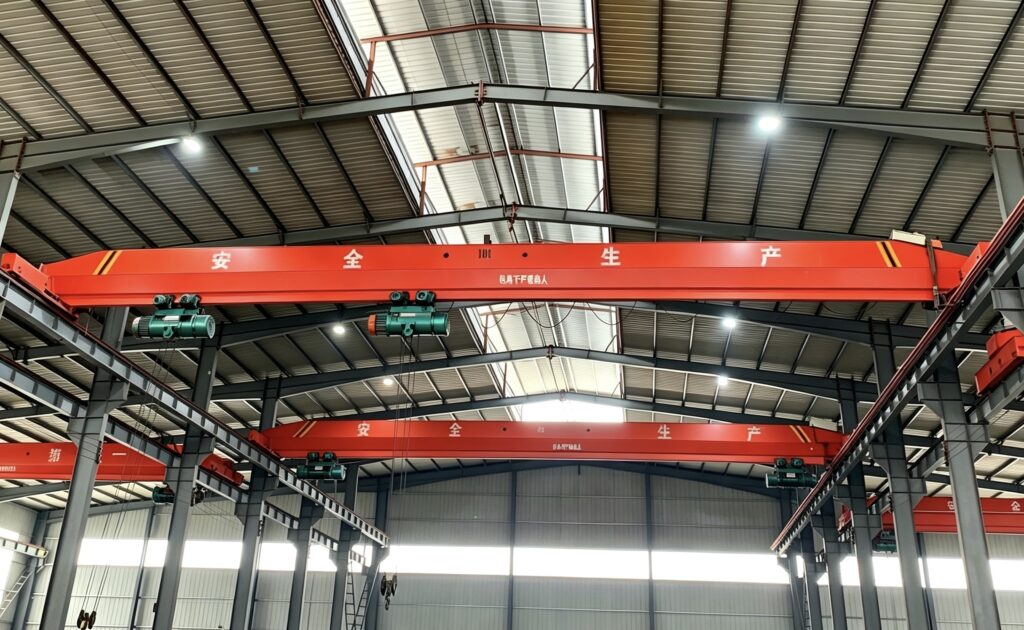
Single Girder Crane
A single-girder design uses one main girder and is commonly selected for light- to medium-duty lifting applications. It offers a compact structure, relatively low investment cost, and convenient maintenance.
It can be a practical choice for machinery workshops, warehouses, production lines, mold handling, and general material transportation.
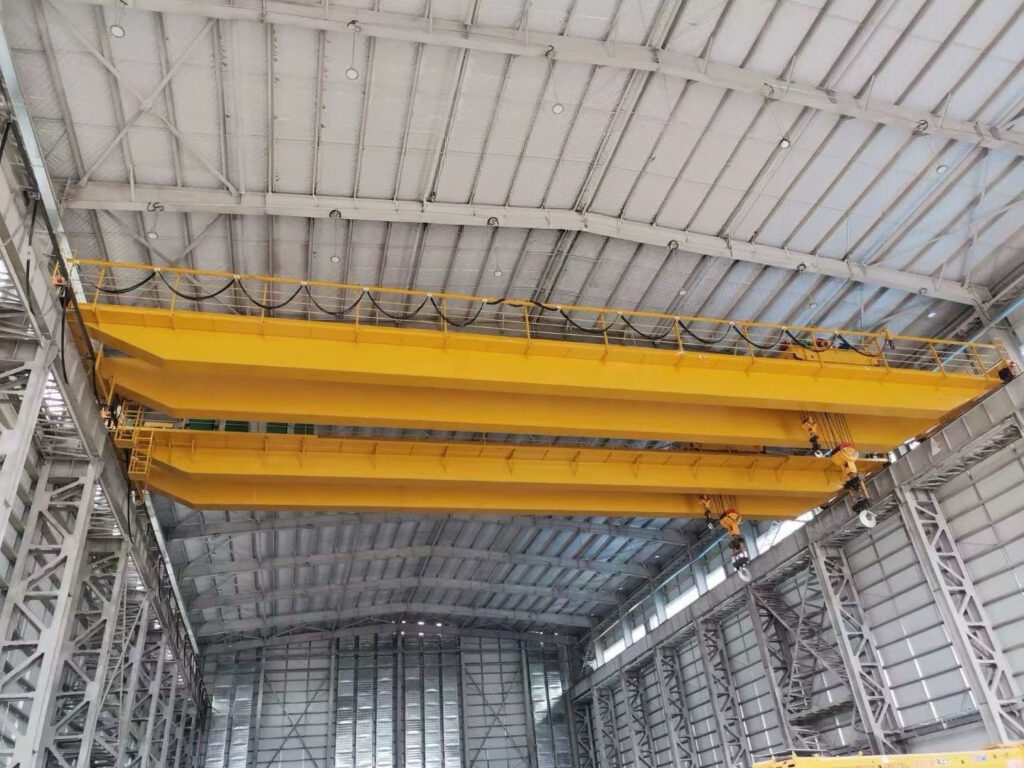
Double Girder Crane
A double-girder configuration uses two main girders and provides greater load-bearing capability and structural stability. It is suitable for heavier loads, longer spans, higher lifting heights, and demanding working conditions.
For heavy industrial applications, a double-girder solution can provide the stability and lifting performance required for continuous material handling.
Why Use a Bridge Crane in Industrial Facilities?
A properly designed bridge crane can provide several important advantages for industrial operations.
1. Better Use of Floor Space
Because the lifting system operates above the working area, production equipment, vehicles, storage racks, and workers can continue using the floor below.
2. Efficient Material Handling
The crane can move materials between different working stations, helping reduce manual transportation and improve production efficiency.
3. Precise Load Positioning
Modern control systems can provide smooth starting, stopping, lifting, and horizontal movement, allowing operators to position loads more accurately.
4. Customizable Configuration
Industrial buildings have different spans, heights, runway conditions, and production layouts. Crane dimensions, lifting capacity, lifting height, control methods, and other technical specifications can therefore be customized according to the project.
Bridge Crane Applications
A bridge crane can be used across many industries where heavy or frequent material handling is required.
Typical applications include:
- Machinery manufacturing
- Steel fabrication
- Automotive component production
- Metal processing
- Mold handling
- Equipment assembly
- Warehousing and logistics
- Foundries
- Renewable energy equipment manufacturing
- General industrial workshops
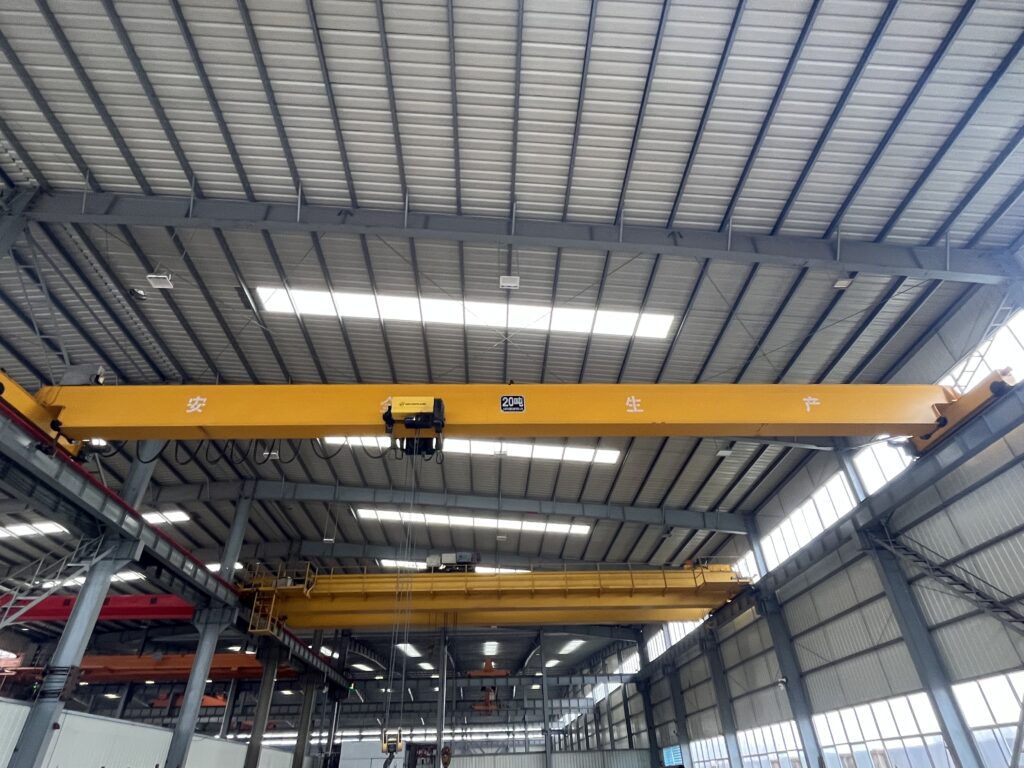
For example, a manufacturing facility may use an overhead crane to transport steel components between welding and assembly areas. An automotive parts factory may use it to handle molds, production equipment, or heavy components.
How to Choose the Right Bridge Crane
Before purchasing a bridge crane, it is important to evaluate several technical factors.
Lifting Capacity
Determine the maximum weight that the crane needs to lift during normal operation. The rated capacity should provide sufficient working margin for the intended application.
Span
The span determines the working width of the crane. It should be designed according to the distance between the runway rails and the actual workshop layout.
Lifting Height
The required lifting height depends on the building height, material dimensions, storage position, and required clearance.
Working Class
Different production environments have different operating frequencies. A crane used occasionally for maintenance requires a different configuration from one operating continuously on a production line.
Control Method
Depending on the application, operators may use pendant control, radio remote control, or cabin operation. More advanced projects can also consider PLC integration and intelligent monitoring systems.
Working Environment
Temperature, humidity, dust, corrosive materials, and other environmental conditions can influence the crane design. Yuefeng offers customized solutions for different working environments, including high-temperature and other demanding applications.
Why Choose Yuefeng Lifting?
Shandong Yuefeng Hoisting Machinery Co., Ltd. has specialized in crane manufacturing since 2007 and operates a modern production facility with more than 120 production and testing facilities and over 200 employees, including experienced technical and management personnel.
As a professional Chinese crane manufacturer, Yuefeng focuses on customized lifting solutions rather than simply supplying standard equipment.
The company’s engineering process covers consultation, customized design, manufacturing, inspection, delivery, installation guidance, and operator training. Its production process includes raw material preparation, precision cutting, assembly, welding, surface treatment, and final inspection.
Yuefeng’s product range includes single-girder and double-girder overhead lifting equipment, with customized capacities and configurations available for different industrial applications.
Quality and Customized Engineering
A reliable bridge crane should be designed around the customer’s actual working conditions rather than selected only by lifting capacity.
Yuefeng engineers consider factors such as:
- Workshop span and building height
- Maximum lifting load
- Required lifting height
- Crane working class
- Runway and supporting structure
- Operating frequency
- Power supply
- Control system
- Working environment
- Safety requirements
The company states that its equipment can be customized for different dimensions, controls, safety systems, and industrial integration requirements. Its bridge crane solutions cover lifting capacities from 0.5 to 100+ tons depending on the specific configuration and application.
Get a Customized Bridge Crane Solution
Choosing the correct bridge crane is an important investment for any manufacturing facility. The right solution can improve material handling efficiency, reduce unnecessary manual transportation, make better use of workshop space, and support safer industrial operations.
If you are planning a new factory, upgrading an existing lifting system, or replacing an old overhead crane, Yuefeng Lifting can provide a customized solution based on your actual requirements.
Visit the official Yuefeng Lifting website to learn more about bridge cranes, gantry cranes, customized lifting equipment, and industrial crane solutions.
Shandong Yuefeng Hoisting Machinery Co., Ltd.
Professional Crane Manufacturer | Customized Lifting Solutions | China