
Table of Contents
Introduction
A gantry crane is a type of overhead crane supported by a framework rather than building columns. Its legs move on rails or wheels, allowing it to lift and transport heavy loads in industrial environments. Gantry cranes are commonly used in shipyards, steel fabrication plants, construction sites, precast concrete facilities, warehouses, and maintenance workshops.
The main advantage of a gantry crane is its ability to combine lifting capacity with mobility. The crane’s bridge spans the working area, the hoist moves along the bridge to lift loads, and the legs provide support and stability. This design enables efficient material handling in areas where installing overhead cranes may be impractical.
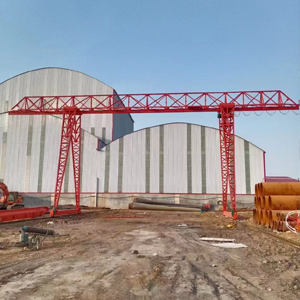
Components of a Gantry Crane
The main components of a gantry crane include:
- Bridge and Girders: Support the hoist and trolley; single girder for light loads, double girder for heavy loads.
- Hoist and Trolley: Hoist lifts and lowers loads; trolley allows horizontal movement along the bridge.
- Legs and Wheels/Rails: Provide support and mobility; can be fixed on rails or movable.
- Control and Safety Systems: Includes operator controls, limit switches, overload protection, and emergency stops.
Understanding these components is essential for selecting the right gantry crane and ensuring safe operation.
Types of Gantry Cranes
- Single Girder Gantry Cranes: Suitable for light to medium loads (1–20 tons), used in workshops and small factories.
- Double Girder Gantry Cranes: Heavy-duty cranes (20–100+ tons), used in steel plants and shipyards.
- Semi-Gantry Cranes: One leg moves on the ground; the other rests on a building, saving space.
- Full Gantry Cranes: Both legs run on rails, handling large loads over long spans.
- Portable and Mobile Gantry Cranes: Lightweight cranes for small workshops or maintenance, easily relocated.
- Specialized/Custom Gantry Cranes: Designed for extreme capacities or unique industrial requirements.
How a Gantry Crane Works
Gantry cranes lift loads using the hoist, which moves vertically, while the trolley moves horizontally along the bridge. The bridge itself may travel along rails or wheels for coverage across the work area. Safety systems prevent overloading and collisions, ensuring reliable operation for heavy or bulky materials.
Applications of Gantry Cranes
Gantry cranes are used in multiple industries:
- Shipyards and Ports: Lifting ship components or containers.
- Steel Fabrication: Handling steel beams, plates, and coils.
- Construction and Precast Concrete: Moving structural components and molds.
- Warehouses and Workshops: Lifting equipment, machinery, and bulk materials.
Advantages of Gantry Cranes
- Flexibility in operation and mobility across different areas.
- Ability to lift heavy loads safely.
- Lower installation cost compared with overhead cranes in some environments.
- Enhanced operational safety and efficiency.
Choosing the Right Gantry Crane
Key considerations when selecting a gantry crane:
- Lifting Capacity, Span, and Height: Determine maximum load, horizontal reach, and vertical lift.
- Environment: Indoor vs outdoor use. Outdoor cranes require weather-resistant materials.
- Operational Requirements: Frequency of use, load type, and space constraints.
- Manufacturer Certification: ISO and CE compliance ensures safety and quality.
Maintenance and Safety
Regular inspection and maintenance are essential:
- Check hoists, trolleys, rails, and structural components.
- Lubricate moving parts and replace worn components.
- Ensure operators are trained and follow safety protocols.
- Use safety devices such as limit switches and overload protection.
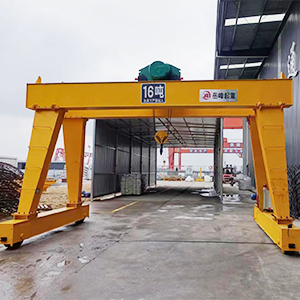
Comparison Table of Gantry Crane Types
| Type | Lifting Capacity | Span Range | Advantages | Typical Applications |
|---|---|---|---|---|
| Single Girder | 1–20 tons | Short–Medium | Low cost, simple installation | Workshops, light factories |
| Double Girder | 20–100+ tons | Medium–Long | High capacity, stable | Shipyards, steel fabrication |
| Semi-Gantry | 5–50 tons | Medium | Space-saving, flexible | Outdoor operations, warehouses |
| Full Gantry | 50–500+ tons | Long | Heavy-duty, robust | Shipyards, container yards |
| Portable / Mobile | 0.5–20 tons | Short | Flexible, easily moved | Maintenance workshops, small ops |
| Specialized / Custom | 50–1000+ tons | Customizable | Tailored for specific needs | Ports, steel mills, large projects |
FAQ
What industries use gantry cranes?
Shipyards, steel fabrication plants, container yards, construction sites, warehouses, and workshops.
How much does a gantry crane cost?
Depends on type, capacity, span, and customization. Portable cranes start from a few thousand dollars; heavy-duty or custom cranes can reach hundreds of thousands.
Can gantry cranes be used outdoors?
Yes, with weatherproof materials and corrosion protection for outdoor environments.
What is the difference between gantry and overhead cranes?
Gantry cranes operate on legs with ground rails or wheels, offering mobility. Overhead cranes are fixed to building structures and span the workspace.
How do I choose the right gantry crane?
Consider load capacity, span, height, frequency of use, and operational environment. Certification compliance (ISO/CE) ensures quality and safety.